


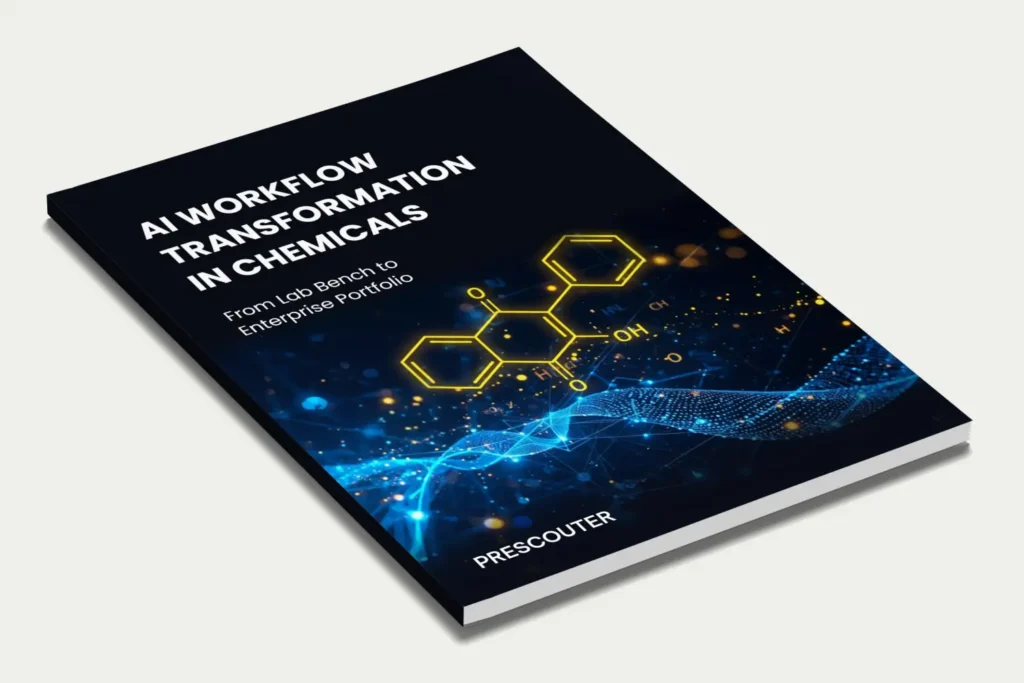
The chemicals industry supports products used daily, such as smartphone coatings, yet its core workflows often slow progress. Complex data, strict regulations, and disconnected systems create delays that impact both teams and timelines. These bottlenecks accumulate into significant hidden costs that limit innovation capacity across organizations.
As these challenges continue to build, AI-enabled workflows offer a practical path that eases workloads by cutting repetitive reviews, freeing teams for higher-value work, and reducing the hidden overhead created by fragmented processes.
Across multiple real-world examples, AI-enabled workflows demonstrate the ability to streamline manual steps, unify dispersed information, and improve visibility for decision-making. Organizations have achieved outcomes such as 30% reductions in quality assurance (QA) effort and removal of 4–6 full-time equivalents (FTEs) worth of duplicated reporting time. These gains deliver rapid ROI, often within 12 months, while reducing multi-million-dollar risks tied to delays.
To enable these improvements, the whitepaper introduces a five-step transformation framework built for chemical R&D and operations. It guides leaders from workflow mapping to quantifying inefficiencies, identifying fit-for-purpose AI tools, piloting high-impact use cases, and establishing governance for enterprise-wide scale. This systematic approach positions chemical organizations to unlock capacity, strengthen compliance, and accelerate innovation.
Included in this whitepaper:
- Hidden inefficiencies slowing chemical workflows
- Quantified losses in hours and cost
- Five-step AI transformation methodology
- Real case studies demonstrating ROI
- AI use cases across R&D and operations
- Governance models for safe scaling
- Executive insights for chemical leaders


